

In Part 3 of this series we looked at the first of the list of items – necessary brief announcements – that rightly belong to the Concluding Rites. This week we will move on to the next item that features in the list found within the General Instruction of the Roman Missal (GIRM).
The second element mentioned as belonging here is described thus:
“the [Presider]’s Greeting and Blessing, which on certain days and occasions is expanded by the Prayer over the People or another more solemn formula;” (GIRM, n.90).
There are several elements within this paragraph that should be unpacked and commented upon.
The ‘Greeting’ is the standard greeting used by the Presider on several occasions during the liturgy, including at the very beginning. The dialogue is well known:
P: The Lord be with you.
A: And with your spirit.
The only real change in this greeting in English took place almost 15 years ago, when the current translation of the Roman Missal came into force. That translation changed the response given to the Presider’s greeting from “And also with you” to “And with your spirit”.
Although many people struggle with that change when it was first introduced, most people no longer struggle with the response.
The second element is the ‘Blessing’, which in its simplest form goes:
P: May almighty God bless you the Father, and the Son, and the Holy Spirit.
A: Amen.
During the invocation of the Trinity, the Presider “makes the Sign of the Cross over the people” (GIRM, n.167).
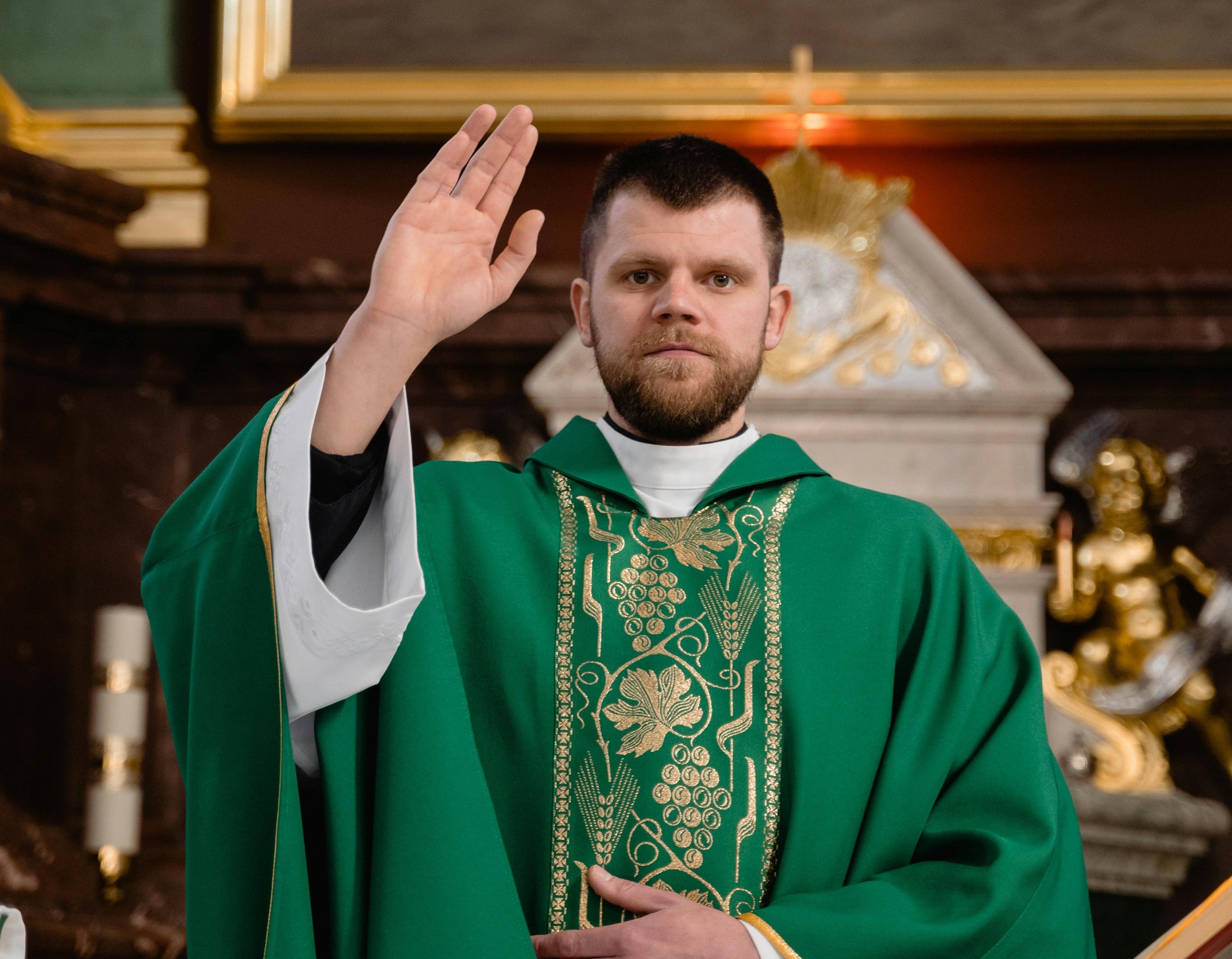
It should be noted that this action is different to that which takes place at the beginning of Mass when the Presider, “together with the whole gathering, signs himself with the Sign of Cross” (GIRM, n.50). At the beginning of Mass everyone signs themselves with the Cross as both a profound surrender to Christ and a reminder that we, all of us, have been claimed by Christ.
At the end of Mass, however, the Presider is invoking God’s blessing on us and makes the Sign of the Cross over the entire assembly (GIRM, n.167) as they prepare to leave the liturgical gathering and venture out into the world to be about God’s work in the world. The blessing, God’s blessing, is about strengthening us for what we are about to embark on as soon as we depart the church building.
Going further along this same track, the fact the Presider is invoking God’s blessing means that we respond differently.
Rather than signing ourselves with the Sign of the Cross as we do at the beginning of Mass, at the end we do nothing. We await the ministerial action of the Presider, who makes the Sign of the Cross over us, rather than doing it ourselves.
We are not blessing ourselves; God is blessing us.
While some scholars have suggested we make the Sign of the Cross ourselves to ‘receive’ God’s blessing, I think this is a little bit of a stretch, and may have more to do with piety than liturgy. The liturgical action, however, is very clear – at the end of Mass, God’s blessing is invoked on us in word and action by the Presider.
And that is where we’ll leave our exploration of the ‘Blessing’ at the end of Mass. Next week, when Part 5 of the series comes along, we will look at those times when the ‘Blessing’ is expanded with other things.
To be continued…