

At the end of Part 4, we had looked at the simple version of the blessing that takes place at the end of Mass. This is what most people will experience on most weekends; it is short, sharp, and to the point.
As we noted in Part 4, however, there are times when the General Instruction of the Roman Missal (GIRM) indicates that the simpler form is “expanded by the Prayer over the People or another more solemn formula” (n.90).
The first of these possible expansions – the Prayer over the People – involves inserting two additional elements: an instruction, and an invocation.
The instruction is a simple one. The Deacon (or the Presider if there is no Deacon) simply asks the Assembly to “Bow down for the blessing”. This text is included in the Roman Missal at the beginning of the section that details these expanded forms of the blessing.
After the instruction is given, the Presider extends his hands over all of the Assembly and uses one of the many texts available for use when this option is utilised. These options can be found on pages 722-726 of The Roman Missal.
In addition to those options, however, there are also some liturgical feasts and seasons that have particular texts for the Prayer over the People associated with them for either compulsory or optional use.
The Season of Lent is a prime example of this, where a Prayer over the People is available for each day of Lent, Sundays and weekdays. Such a prayer is mandated on the Sundays of Lent, while they are optional on weekdays.
Regardless of the source in The Roman Missal, each of the prayers concludes with “Through Christ our Lord”, to which the Assembly responds with the customary “Amen”.
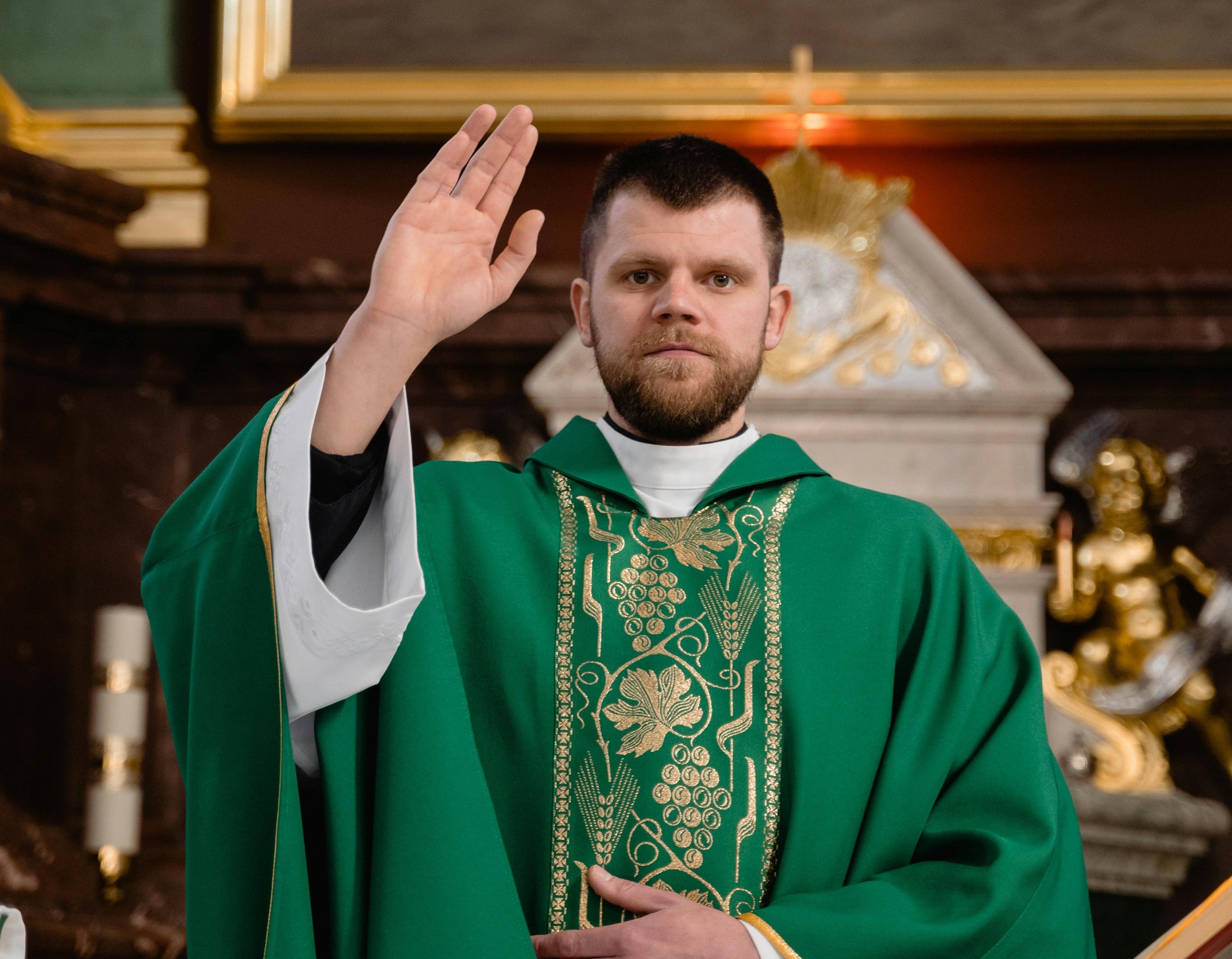
The Presider then concludes this slightly expanded form of the Greeting and Blessing with a slightly expanded form of the blessing itself:
And may the blessing of almighty God, the Father, and the Son, and the Holy Spirit, come down on you and remain with you forever.
While saying this, the Presider makes the sign of the cross over the Assembly in the usual way, with the Assembly also responding in the usual way (see Part 4 for more on this).
And that is the first form of the expanded Greeting and Blessing that is sometimes encountered. It is a beautiful and joyous means of enhancing this part of the Concluding Rites, and is really only trumped by the Solemn Blessing.
But that exploration can wait until Part 6.
To be continued…