

Having finished in Part 6 our look at the Greeting and Blessing that is the second element of the Concluding Rites, we move our attention to the third element.
The General Instruction of the Roman Missal (GIRM) lists this third element as:
the Dismissal of the people by the Deacon or the [Presider], so that each may go back to doing good works, praising and blessing God; (n.90)
Before we look at the texts used for the Dismissal, however, it is interesting to note the rest of this phrase.
We are not dismissed to nothing, nor should the dismissal be seen as an ending. We are dismissed to go back to doing good works. Not to start doing good works; to go back to doing good works.
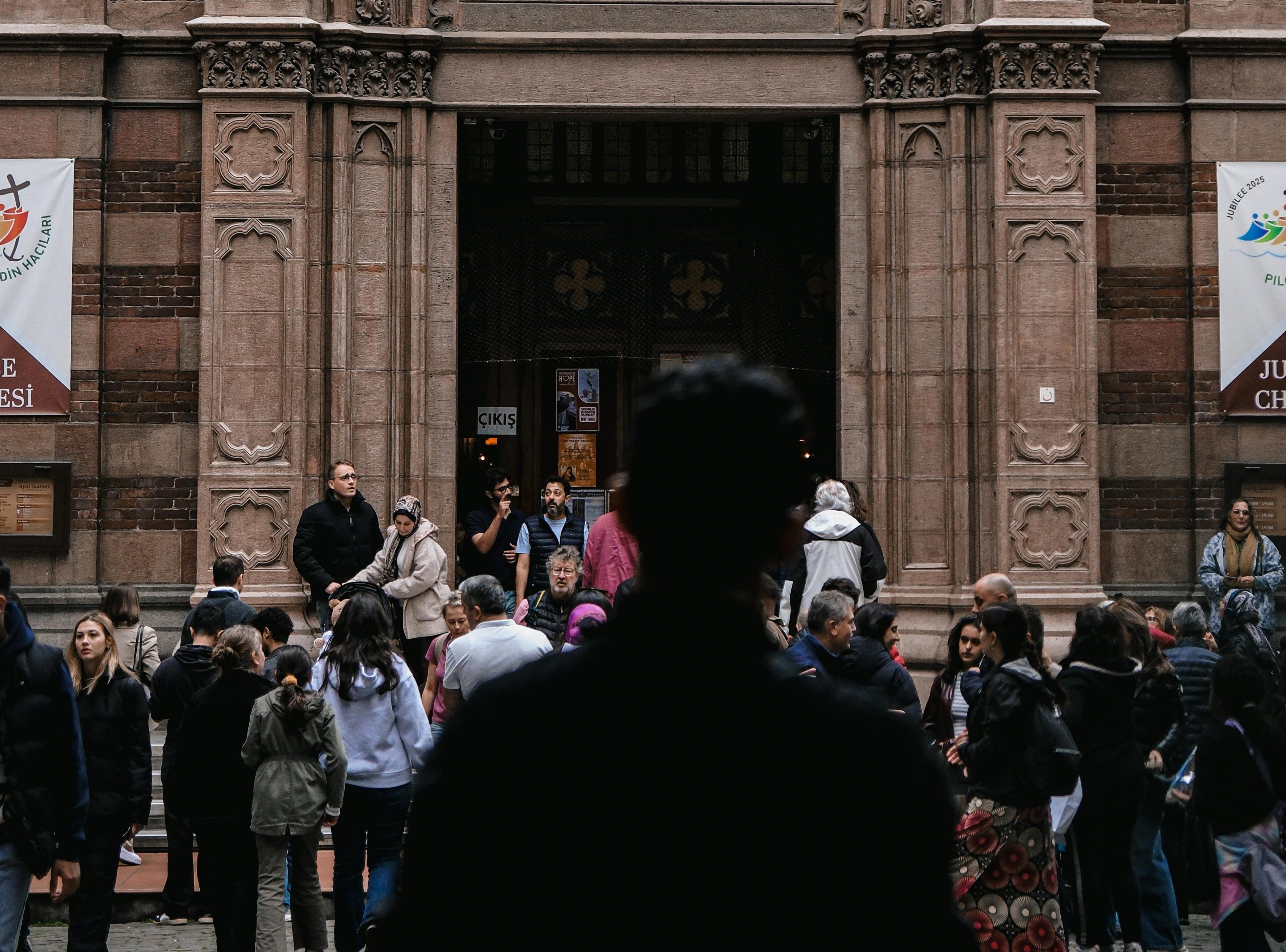
Such a seemingly inconsequential phrase has on the contrary very significant meaning for those who have gathered to praise and bless God while celebrating Mass.
The implication is that we have been called from doing good works, to be strengthened by Word and Sacrament, to be sent back to doing good works. The doing of good works does not flow from our attending at Mass or other liturgical forms, but rather from something much more fundamental: from our Baptism.
It is almost as if the gathering of the assembly is a temporary hiatus, an opportunity to gather to ensure that we are encouraged and strengthened to do what we should be doing in the first place. And I would suggest that is entirely accurate.
It further suggests that attending the Church’s liturgy is not the sum total of our Christian lives.
And again, I would suggest that while the Second Vatican Council referred to liturgical participation as “the source and summit” of the Christian life, the Council also suggested that liturgical participation did not exhaust the entire activity of the Church (see the Constitution on the Sacred Liturgy, nn.9, 10).
This is the context of the Dismissal of the people who have gathered to praise and worship God. It is to bring all that we have been doing to that action, so that we can be prepared to go back to undertaking that action.
Turning our attention to the texts to be used, the Order of Mass (OM) provides the words by which the Deacon (or Presider if there is no Deacon) dismisses the people back to their baptismal undertaking. There are four options to be found at OM n.144, and no provision for the use of “these or similar words” is made.
This lack of permission for variations is not something new in the current translation of the Roman Missal; it was there in the previous editions, but was sometimes honoured more in the breach.
The four variations in the current OM, listed in the order found in the OM, are:
Go forth, the Mass is ended.
Go and announce the Gospel of the Lord
Go in peace, glorifying the Lord by your life.
Go in peace.
Each of these texts send people from the liturgical gathering, each in its own way. The use of ‘Go’ in each must really be seen as a command (the original Latin makes this clear) for everyone who has gathered to get back to what they were doing before that gathered. And that is the very point of the dismissal.
Whichever text is used by the Deacon or Presider, the response of the gathered assembly is a very simple “Thanks be to God”, a reminder I believe of why we were gathered in the first place, i.e., to praise God and to be strengthened for the mission that is ours in Baptism.
And that is the third of the four elements that make up the Concluding Rites. The last one can wait for Part 8.
To be continued…