

In Part 3 we had begun to speak about the process by which the gifts of bread and wine, that which will ultimately become the Body and Blood of Christ are brought to the altar.
It should surprise no one that that since the bread and wine are being processed, there should be sung accompaniment. This singing “which continues at least until the gifts have been placed on the altar” follow the “norms on the manner of singing … as for the Entrance Chant” (GIRM, n.74).
Those ‘norms’ determines both who does the singing, and what is sung, and is reflected in n.48 of the GIRM. In essence there is plenty of scope for the what, and the who has a number of permutations from the choir alone, through alternating between choir and assembly, to assembly alone.
The most important thing, clearly, is that there is singing, so much so that the General Instruction says that “Singing may always accompany the rite at the Offertory, even when there is no procession with the gifts” (n.74).
Once the bread and wine have been received by the Presider, they are “placed on the altar … to the accompaniment of the prescribed formulas” (n.75). These prescribed formulas begin with “Blessed are you…”, reminiscent of the Jewish prayers of blessing used during ritual meals, the same prayers that would have been prayed by Jesus and his Disciples at the Last Supper.
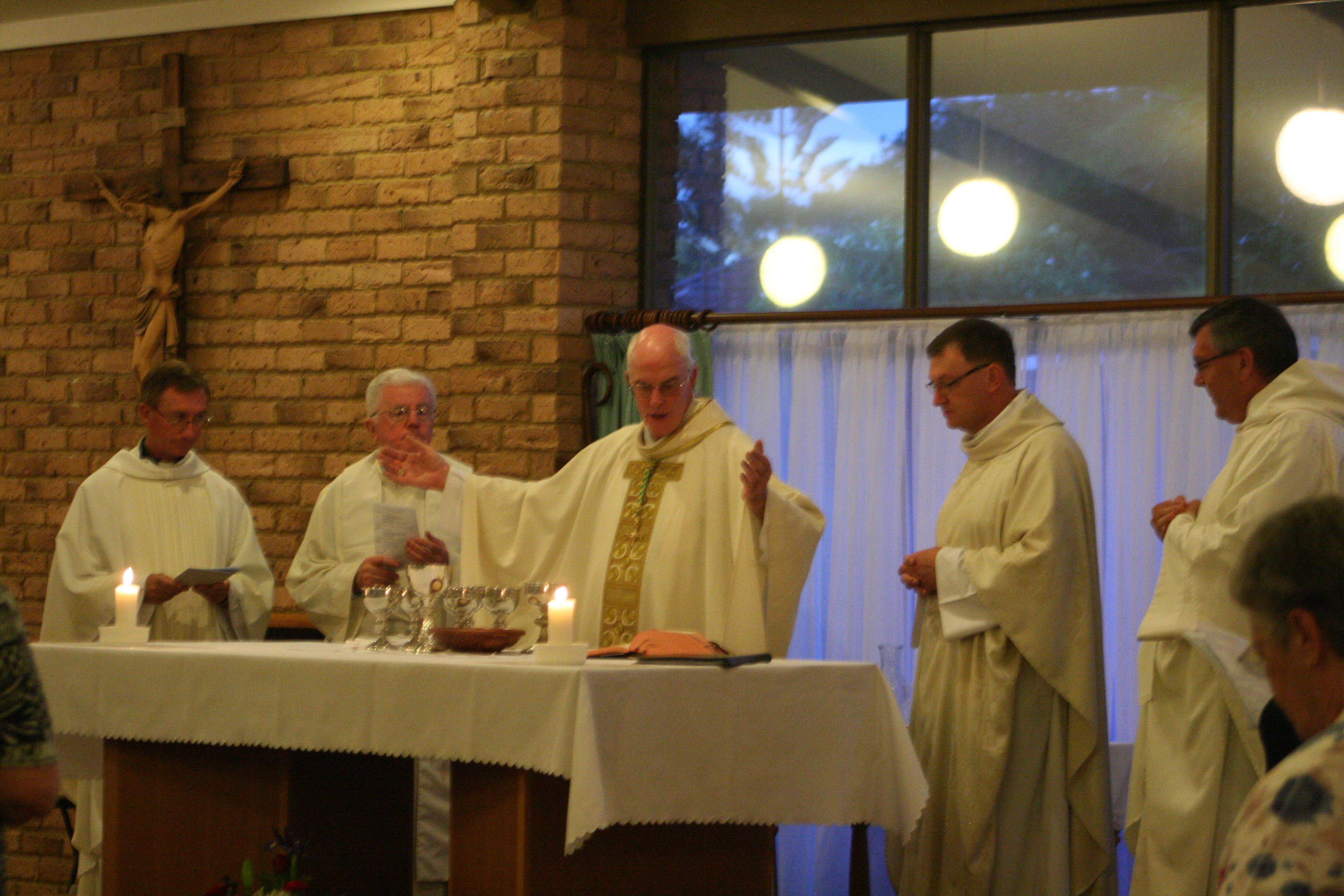
When said aloud by the Presider the formulas can invoke the response “Blessed be God forever” from the gathered assembly, but only in specific circumstances. The Order of Mass says, in nn.24 and 25, that “If, however, the Offertory Chant is not sung, the [Presider] may speak these words aloud; at the end, the people may acclaim”.
There are some who suggest that the prescribed formulas used at this point of the Liturgy of the Eucharist should always be said aloud, even if there is singing, with the Presider waiting until the singing is completed before saying, aloud, “Blessed are you…”. Such a practice is completely contrary to even a cursory reading of the General Instruction and the Order of Mass.
In short, if there is singing, then the words are said by the Presider quietly; if there is no singing, then and only then, is it possible for the words to be said aloud and the assembly respond. Anything else is simply not appropriate.
On some more solemn occasions, it is possible for the use of incense at this point. The Presider first incenses the bread and wine on the altar, and then proceeds to incense the altar itself along with the cross that stands near or on it. This is done to “signify the Church’s offering and prayer rising like incense in the sight of God” (n.75).
But it is not only the bread and wine that is incensed at this point: the Presider and whole assembly are also incensed, which further connects the offerings of bread and wine with the offering of themselves undertaken by the Presider and people.
After any incensing has been complete, the Presider washes his hands, symbolic of “the desire for interior purification” on the part of the Presider. Although the origin of this action probably goes back to the days when the people who gathered brough a whole range of gifts, including some that might be “messy”, those days are well behind us.
The significance of the washing of hands is no longer about the Presider having physically clean hands, but rather more about having a clean heart before continuing with the Liturgy of the Eucharist. This is highlighted by the words the Presider uses while undertaking this action:
Wash me, O Lord, from my iniquity
and cleanse me from my sin.
With this simple action with profound symbolic meaning completed, the “Take” part of the Liturgy of the Eucharist comes to a close. Next week, in Part 5 of our exploration of the Liturgy of the Eucharist, we will move on to look at what happens during the “Bless” part.
To be continued…