

At the end of Part 8 we had concluded our look at the Institution narrative of the Eucharistic Prayer, and were ready to move on in our exploration of the Eucharistic Prayer.
But there were two things I forgot to mention that are connected with the Institution narrative. Both are covered n.150 of the General Instruction of the Roman Missal.
The first of these is the use of incense. If incense is being used during Mass, then the thurifer (the person in charge of the incense-holding thurible) will incense the consecrated host and the chalice when they are shown to the gathered assembly. On more solemn occasions, this is another means of adding an appropriate show of respect towards the consecrated host and chalice.
The second concerns the use of “a small bell”, again during each of the two showings. The bell is used “according to local custom”, though its purpose in the current liturgy is questioned by some commentators.
With those two additional brief comments made, we can now move on to what comes immediately after the Institution narrative: the memorial acclamation.
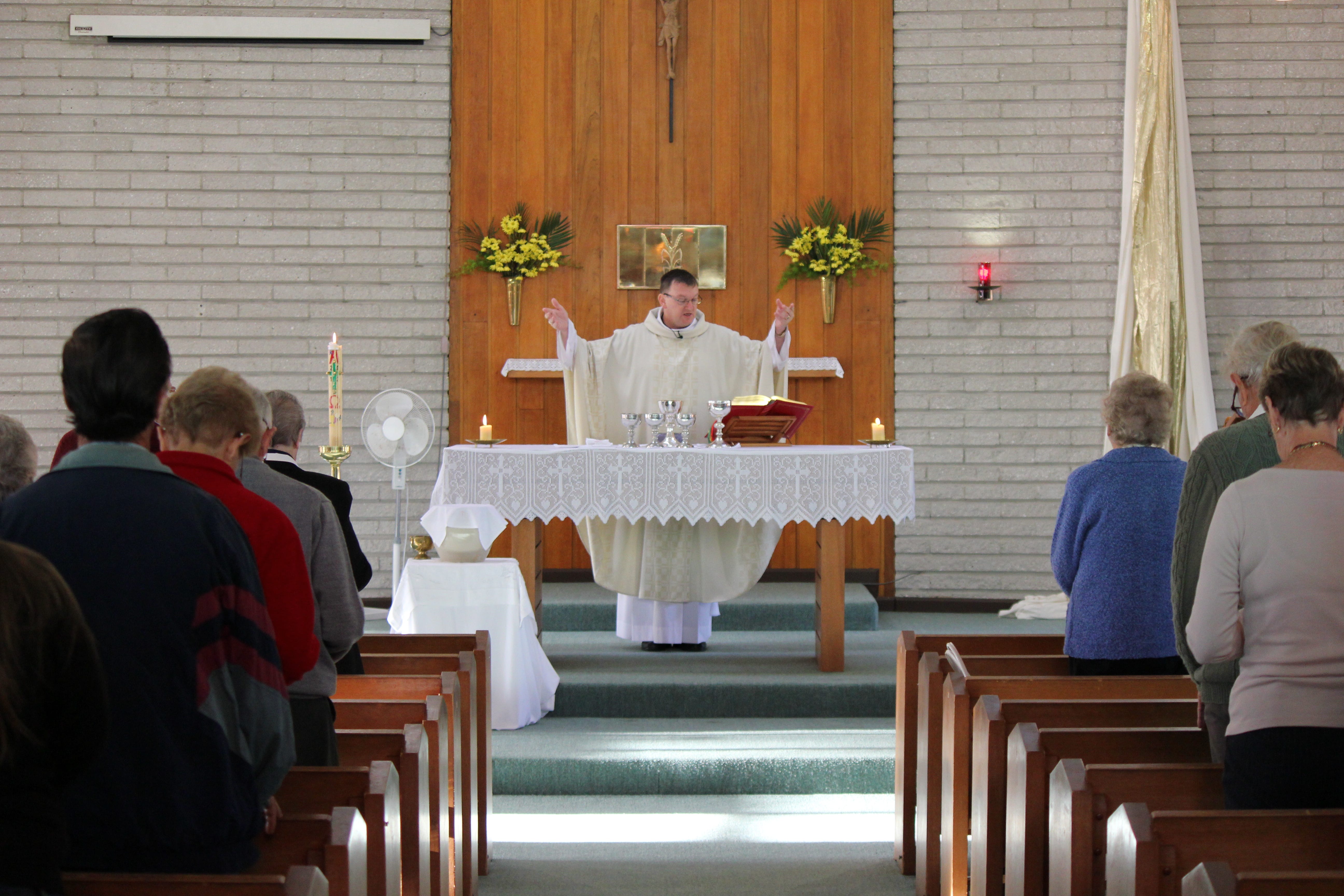
This begins with the presider singing or saying, “The mystery of faith”, with the assembly responding with one of the three options found in the Roman Missal. The current edition of the Missal (2010) has removed what many people believed to the most popular respond (“Christ has died, Christ is risen, Christ will come again”) from the authorised responses, with the other three being retranslations of what was in the previous edition.
As indicated, the invitation from the presider can be sung, just as the assembly’s response can be sung. As one of the three Eucharistic acclamations, it is perhaps preferable for the response to be sung, at least on Sundays and more solemn occasions.
The other thing to be said is that the response belongs to the assembly; it is thus not appropriate for the presider to join in – or start for that matter – the response to the invitation “The mystery of faith”. The presider should remain silent, and allow the voice of the assembly to be heard.
The choice of which response to be used is thus in the hands of the assembly. When it is sung, this can be led by the musicians; when it is not, someone – not the presider – simply needs to start.
With the memorial acclamation now complete, we move on to the next part of the Eucharistic Prayer. But that can wait until Part 10 of the series.
To be continued…