

As we saw in Part 1, the first of the ‘parts’ of the Liturgy of the Eucharist is summed up in the word “Take”, the action of receiving the gifts and bread and wine and preparing them for what comes next.
The General Instruction of the Roman Missal (GIRM) addresses the primary thrust of this action very simply:
At the beginning of the Liturgy of the Eucharist the gifts which will become Christ’s Body and Blood are brought to the altar. (n.73)
As well as being a simple explanation, it is also a very pragmatic description. The gifts – bread and wine – move from where they were until this point to the altar. How this happens we will look at in Part 3.
And that is because there is something that needs to take place before bread and wine make their way to the altar for what comes next.
As the GIRM notes:
First of all, the altar or Lord’s table, which is the centre of the whole Liturgy of the Eucharist, is made ready when on it are placed the corporal, purificator, Missal and chalice (unless this last is prepared at the credence table). (n.73)
The naming of these specific items, all of which are necessary for the remainder of the Liturgy of the Eucharist, seems to assume that they are not present on the altar before this point. It assumes that the altar is, in fact, bare, and nothing has been placed on it before reaching this point of the Mass.
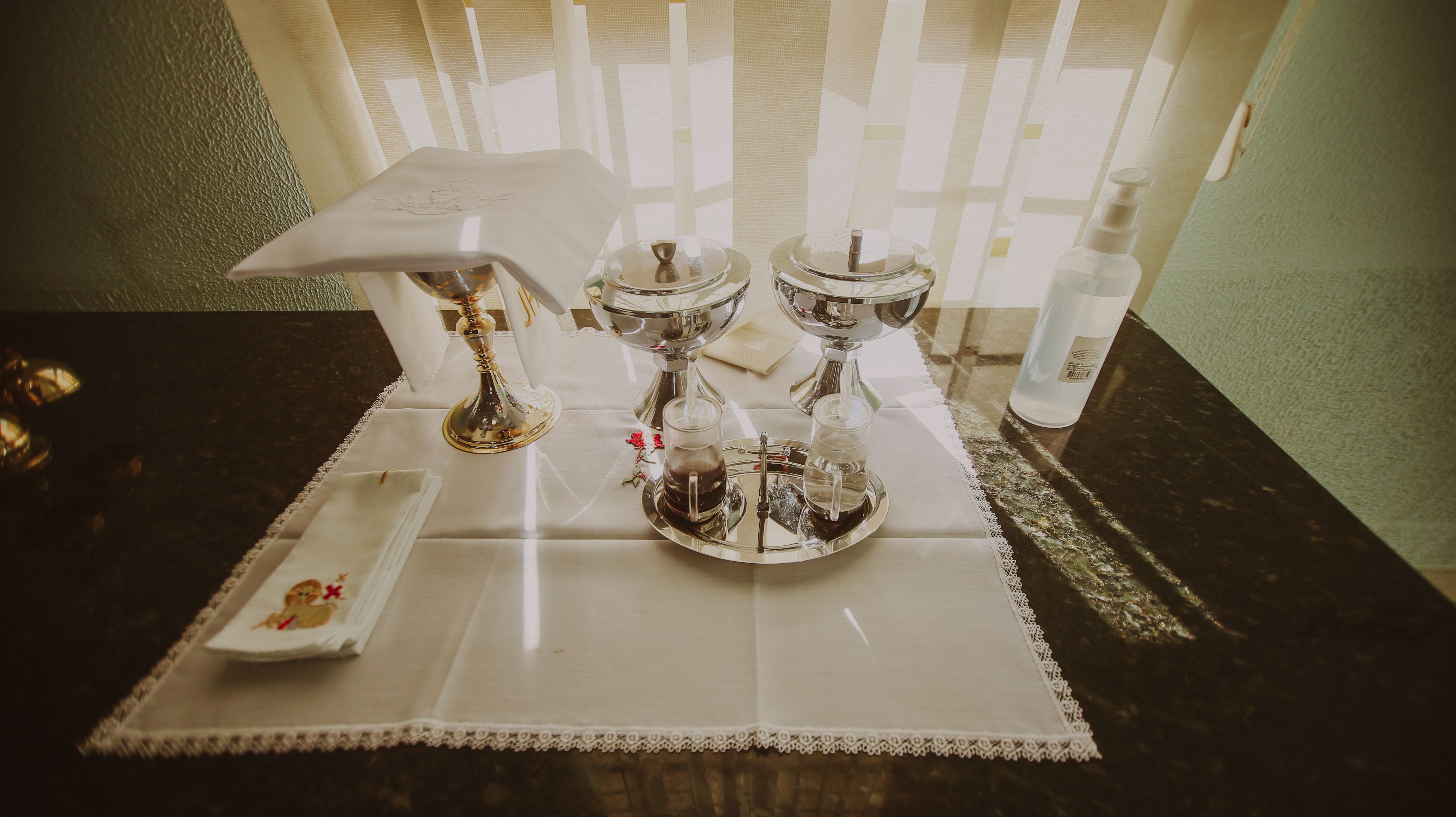
The only exception is the Book of the Gospels if this was processed during the Entrance Procession and placed on the altar before ultimately moving to the ambo when needed during the Liturgy of the Word.
Which means that the sometimes-seen practice of having the Missal on the altar from the beginning of Mass – and the Presider ‘presiding’ from the altar at the beginning of Mass – is entirely contrary to the expectations of the GIRM.
It also means the practice of having the corporal on the altar from the beginning of Mass, or the ornately draped chalice on the altar when Mass begins, is also entirely contrary to the expectations of the GIRM.
Indeed, it seems abundantly clear from a plain reading of n.73 that nothing that will be used during the Liturgy of the Eucharist should be placed on the altar until this point in the Mass, leaving the Lord’s table completely free.
Arguments are sometimes heard that having these things on the altar from the beginning of Mass ‘saves time’ or makes a connection between what has gone before the Liturgy of the Eucharist with what happens during that part of the Mass.
Such rationales are, however, spurious. The GIRM is quite clear in meaning.
Sometimes such practices are justified by referring to their existence during the pre-conciliar form of the Mass. But in this case, we need to understand that while they may indeed belong to the pre-conciliar Mass, they do not belong to the post-conciliar form that is managed by the GIRM and not any previous practice.
The preparation of the altar is a necessary and very practical aspect of the Liturgy of the Eucharist. There is no need for it to be overly ritualised in any way, though like all actions within the liturgy it should be undertaken with an appropriate level of decorum.
And once the altar is prepared, once all the things necessary to facilitate the remainder of the Liturgy of the Eucharist are present on the altar, then, and only then, can we move on to the movement of bread and wine towards the altar.
But that will have to wait until next week and for Part 3.
To be continued…